
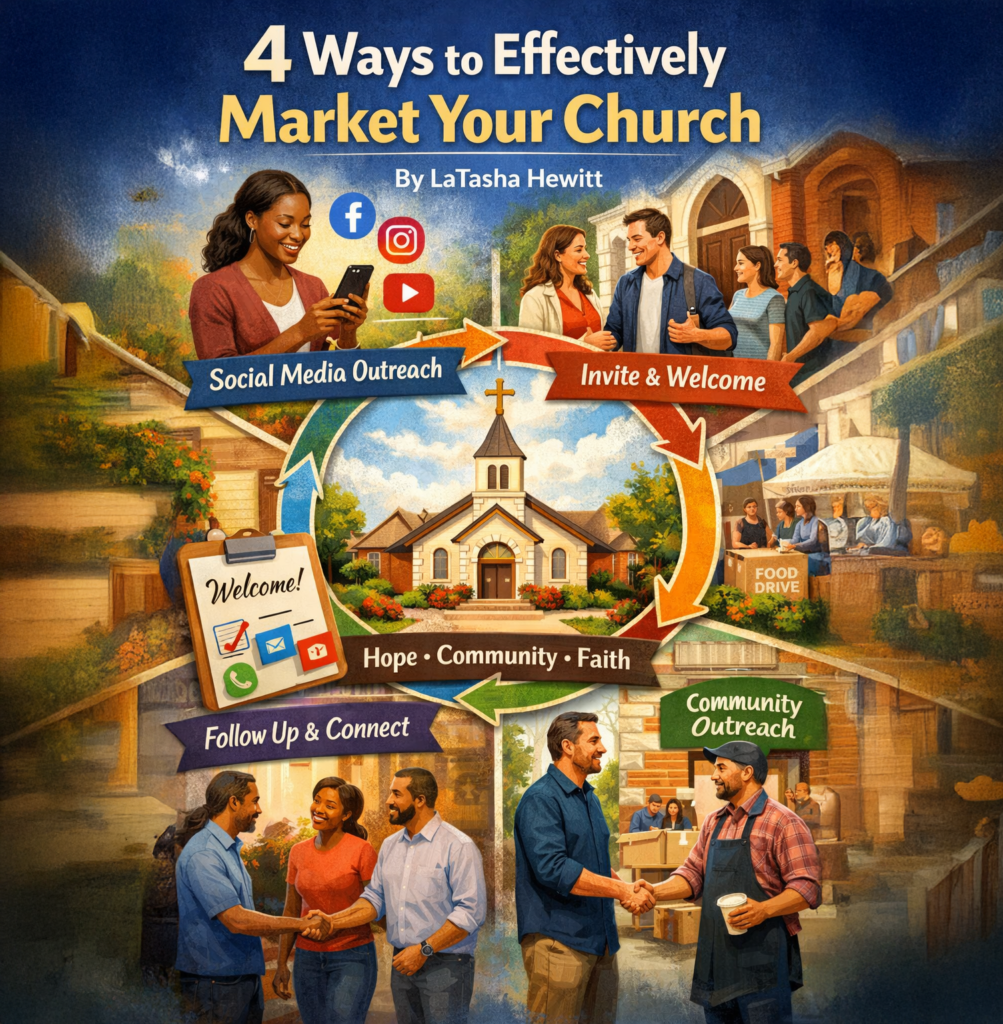
For church communicators, marketing isn’t about selling a product — it’s about building bridges. Thoughtful marketing creates connection between the people inside your church and those in your community who are searching for hope, belonging, and spiritual growth.
When done well, church marketing cultivates an environment where people feel seen, valued, and confident that their spiritual needs can be met. Here are four practical ways your church can effectively communicate who you are and what you offer.
1. Establish a Consistent Social Media Presence
With nearly three-quarters of the U.S. population using social media, churches have an unprecedented opportunity to reach people locally and globally. A strong digital presence allows your ministry to show up in everyday moments.
To maximize impact:
- Be consistent. Aim to post 1–3 times per week to stay visible and relevant.
- Prioritize ministry over promotion. Instead of only posting event flyers, share meaningful content such as:
- “What to Pray When You’re Stressed”
- “How to Forgive Someone Who Hurt You”
Include Scripture references and practical application.
- Use compelling visuals and headlines. Strong graphics, clear text, and engaging titles capture attention in crowded feeds.
- Invite engagement. Encourage viewers to follow, like, subscribe, comment, and share.
Remember: social media is not just a bulletin board — it’s a ministry platform.
2. Create a Culture of Invitation
People are far more likely to visit a church when invited by someone they know and trust. An invite culture empowers your congregation to become your most effective ambassadors.
To foster this culture:
- Create invite-worthy experiences. Ensure services and events are welcoming, clear, and accessible to first-time guests.
- Host bridge events. Community-centered gatherings such as fall festivals, holiday productions, or service projects provide natural entry points.
- Offer connection beyond Sabbath morning. Sports leagues, small groups, workshops, and family activities help people engage at their comfort level.
When members feel proud of and excited about their church experience, invitations happen organically.
3. Build a Clear Follow-Up System
Attracting guests is only the first step — connection happens through intentional follow-up. Without a system, meaningful opportunities can be missed.
Consider implementing:Email capture strategies. Collect contact information through event registrations, online forms, and digital sign-ups.Connect cards. Offer simple ways for guests to express interest in prayer, Bible study, baptism, volunteering, or membership.Timely communication. Follow up within 24–48 hours with a personal message that expresses gratitude and offers next steps.Effective follow-up communicates, “You matter, and we’re glad you’re here.”
4. Build Relationships Within Your Community
Church marketing extends beyond digital platforms. Strong community relationships amplify your presence and credibility.
Practical ways to engage:
- Support local organizations. Follow, like, and engage with businesses, schools, nonprofits, and neighboring churches online.
- Show up. Attend community events and support local initiatives.
- Make personal connections. Visit local businesses and introduce yourself. When people can put faces to your church, trust grows.
Visibility plus genuine involvement builds influence.
Marketing your church is ultimately about making others aware of the hope, community, and transformation found within your congregation. It requires intentional communication, authentic relationships, and a heart for meeting real needs.
When churches market with clarity and compassion, they don’t just increase attendance — they expand impact.